
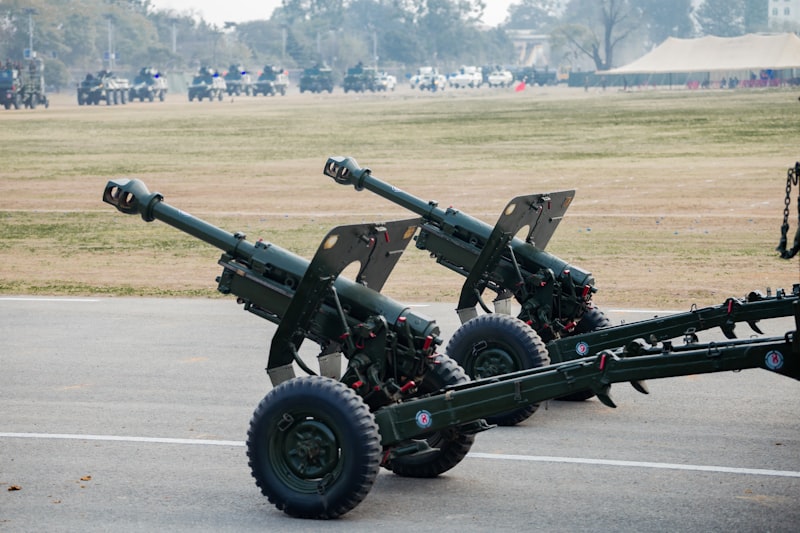
North Korea conducted three days of weapons tests starting Monday that included ballistic missiles armed with cluster-bomb warheads, according to the state-run Korean Central News Agency.
Why it matters: the tests represent Pyongyang’s most intensive weapons demonstration this year and introduce a new warhead type designed to maximise damage across a wide area, raising the threat level to South Korea.
What was tested
KCNA said the programme included cluster-munition warhead systems mounted on nuclear-capable Hwasong-11 ballistic missiles. The Hwasong-11 resembles Russia’s Iskander missile in design, using low-altitude manoeuvrable flight to evade missile defence systems.
The state news agency claimed the missiles “can reduce to ashes any target covering an area of 6.5 to 7 hectares with the highest-density power.” That is roughly the size of 10 football pitches.
The tests also demonstrated anti-aircraft weapons, purported electromagnetic weapons systems, and carbon-fibre bombs, according to KCNA.
South Korea’s response
South Korea’s Joint Chiefs of Staff said it detected multiple missile launches from an eastern coastal area, the second round of launches in two days. The missiles flew between 240 and 700 kilometres before falling into the sea off North Korea’s east coast.
Seoul has not issued a formal diplomatic protest but is monitoring for further launches.
The broader context
The tests come while global attention is focused on the Iran ceasefire negotiations and the Middle East conflict. North Korea has historically timed provocative weapons demonstrations to coincide with periods of reduced international attention.
Cluster munitions are banned under a 2008 international convention, though neither North Korea, South Korea, nor the United States have signed that treaty.