
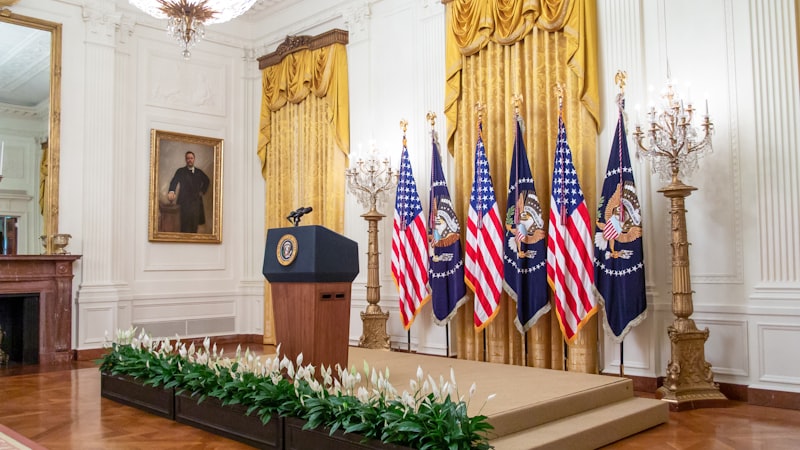
NATO Secretary General Mark Rutte arrived at the White House on Tuesday for talks with President Donald Trump, the most consequential meeting between the two since the US-Iran war strained the Western military alliance to its limits. Secretary of State Marco Rubio and Defence Secretary Pete Hegseth joined the discussions.
Why it matters: The United States accounts for roughly two-thirds of NATO’s total defence spending. A US withdrawal would fundamentally alter Europe’s security architecture at a moment when the continent faces active conflicts in Ukraine and the Middle East.
What triggered the crisis
Trump threatened to pull the United States out of NATO after allied nations refused to assist with military operations aimed at reopening the Strait of Hormuz. Iran effectively closed the waterway during the conflict, sending global oil prices past $115 a barrel.
Spain prohibited the use of its airspace for US strikes on Iran. France restricted access to joint military facilities. Trump described these decisions as acts of betrayal by nations sheltered under the American security umbrella.
The case for staying
Alliance supporters argue that NATO has kept the peace in Europe for more than 75 years. Abandoning it would hand a strategic victory to Russia and China, who have sought to fracture Western unity. European nations have increased defence spending significantly since 2022, with 23 of 32 members now meeting the 2% of GDP target.
Rutte has framed increased burden-sharing as an achievable goal, not a crisis. He is expected to present a concrete plan for further European contributions during the Washington talks.
The case for pressure
Critics of the alliance argue that decades of European under-investment in defence have left the US carrying an unsustainable burden. According to NATO figures, the United States spent $886 billion on defence in 2025, more than all other members combined.
Trump and his allies view the refusal to support Hormuz operations as proof that the alliance is one-sided. Senator JD Vance, now vice president, has long argued that the US should redirect its military focus toward the Indo-Pacific rather than subsidising European security.
What happens next
Rutte’s Washington visit continues through 12 April, including a speech at the Ronald Reagan Presidential Foundation on 9 April and attendance at the Bilderberg Group meeting from 10 to 12 April. The substance of Tuesday’s talks will likely shape whether Trump’s withdrawal threat escalates from rhetoric to action before the NATO summit scheduled for The Hague in June.