
Trump’s statement
President Donald Trump told Fox News in an interview on 5 April that US-Iran negotiations are ongoing and are “going very well,” pushing back against media reports that talks had stalled. Trump said the deadline he set for Iran to reopen the Strait of Hormuz — 6 April — remained in place, while indicating he was prepared to extend the pause on strikes against Iranian power infrastructure if talks showed progress.
Trump had previously postponed planned strikes on Iran’s power grid from late March to 6 April to allow diplomatic contact to continue.
Iran’s position
Iran’s central military command issued a public statement on 5 April dismissing Trump’s ultimatum as “a helpless, nervous, unbalanced and stupid action.” The statement gave no indication that Iran intended to reopen the strait by the deadline. No Iranian official has publicly confirmed the existence of direct or indirect negotiations with the United States.
Why it matters
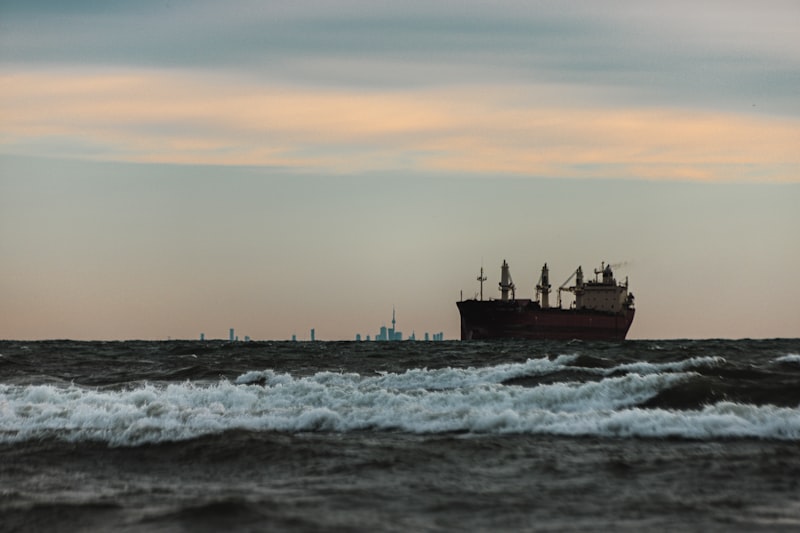
The Strait of Hormuz carries roughly 20% of global oil supply. Its closure since late February has pushed international crude prices above $100 per barrel, driven petrol prices above $4 per gallon in the United States, and triggered emergency fuel levy reductions in multiple countries including South Africa. A negotiated reopening would provide immediate relief to global energy markets. A continuation of the closure — or an escalation in US strikes — would deepen the economic impact.
Military situation
A US Air Force F-15E Strike Eagle was shot down near the strait on 4 April, the second American combat aircraft lost in the conflict. Both crew members were subsequently rescued. US Central Command confirmed the rescue operation. A second aircraft, an A-10, was also hit in the same period, with its pilot recovered from the Persian Gulf.
Iran has separately struck Gulf oil refinery infrastructure, compounding supply disruptions beyond the strait closure itself.
What has not been confirmed
No third-party mediator for talks has been publicly identified. Qatar, Oman, and Switzerland have historically facilitated US-Iran communications, but none has publicly confirmed a current role. The White House has not released details of any proposed framework, and Iran has not acknowledged receiving or responding to any US proposal.